<TextBlock>
<RichText>
<Paragraph>Whether building or renovating, planning a wood fire in New Zealand involves a few key considerations — what’s allowed in your area, how installation works, and choosing the right fire for your home.</Paragraph>
<Break />
<Paragraph>Because of regional rules and emissions standards, not every fire is suited to every home. But once you understand what applies, it becomes straightforward.</Paragraph>
<Break />
<Paragraph>To make it easier, we’ve broken the process down into a step-by-step guide, so you can plan with confidence and choose the right wood fire for your home.</Paragraph>
</RichText>
</TextBlock>
<TextBlock>
<Title>Step 1: Check What Wood Fires Are Allowed in Your Area</Title>
<RichText>
<Paragraph>Wood fire installations are regulated by national emissions standards, with some regional councils enforcing stricter rules — particularly in regions like <Link url="https://www.ecan.govt.nz/data/authorised-burners" target="_blank">Canterbury</Link>, <Link url="https://www.rotorualakescouncil.nz/property-building-bins/building-resource-consents/minor-work/solid-fuel-heater" target="_blank">Rotorua</Link>, <Link url="https://www.nelson.govt.nz/6environment/1air/burner-rules-and-regulations" target="_blank">Nelson</Link>, and parts of <Link url="https://www.orc.govt.nz/environment/air-care/home-heating/" target="_blank">Central Otago</Link>.</Paragraph>
<Break />
<Paragraph>In New Zealand, wood fires are classified based on emissions and efficiency standards. The main categories you’ll come across are:</Paragraph>
<Break />
<UnorderedList>
<ListItem><Strong>ULEB</Strong> (Ultra Low Emission Burner) — the lowest emissions, required in stricter urban zones. </ListItem>
<ListItem><Strong>Clean Air</Strong> — approved for many towns and cities. </ListItem>
<ListItem><Strong>Rural</Strong> — typically permitted in low-density or rural areas with fewer restrictions. </ListItem>
</UnorderedList>
<Break />
<Paragraph>These classifications determine which fires you can install, so it’s worth confirming early. To get started:</Paragraph>
<Break />
<UnorderedList>
<ListItem>Check your regional council’s requirements.</ListItem>
<ListItem>Confirm which models are approved via the <Link url="https://environment.govt.nz/guides/authorised-wood-burners/" target="_blank">authorised wood burner list</Link>.</ListItem>
<ListItem>Speak with a <Link url="https://www.escea.com/buy-fireplace/" target="_blank">fireplace retailer</Link> if you’re unsure.</ListItem>
</UnorderedList>
<Break />
<Paragraph>Escea offers a range of wood fireplaces that meet New Zealand emissions standards, including options suitable for stricter ULEB and Clean Air zones — making it easier to find a fire that’s both compliant and suited to your home.</Paragraph>
</RichText>
</TextBlock>
<Image format="landscape" file="https://cdn.prod.website-files.com/69294541b21cf576e68ed053/69fd2c83e7581c97dff3abe0_Escea%20Woodfire%20Series%20ULEB%20Clean%20Air%20hi%20res.avif" description="Escea Wood Fireplaces Range New Zealand" width="full">
<Label>
A lineup of compliant Escea wood fireplaces—engineered to meet New Zealand emissions standards without compromising performance or presence.
</Label>
</Image>
<TextBlock>
<Title>Step 2: Consent & Installation</Title>
<RichText>
<Paragraph>Installing a wood fire requires building consent to ensure everything meets safety and compliance standards.</Paragraph>
<Break />
<Paragraph>In most cases, your installer or retailer will guide you through this process — coordinating consent, installation, and final sign-off.</Paragraph>
<Break />
<Paragraph>Key things to expect:</Paragraph>
<Break />
<UnorderedList>
<ListItem>Building consent is required.</ListItem>
<ListItem>Installation must be completed by a certified installer.</ListItem>
<ListItem>Access to the roof or exterior wall is needed for the flue.</ListItem>
<ListItem>Some wall or ceiling work may be required.</ListItem>
</UnorderedList>
</RichText>
</TextBlock>
<TextBlock>
<Title>Step 3: Choose Your Fireplace Style</Title>
<RichText>
<Paragraph>Most wood fires fall into two categories: freestanding and inbuilt.</Paragraph>
<Break />
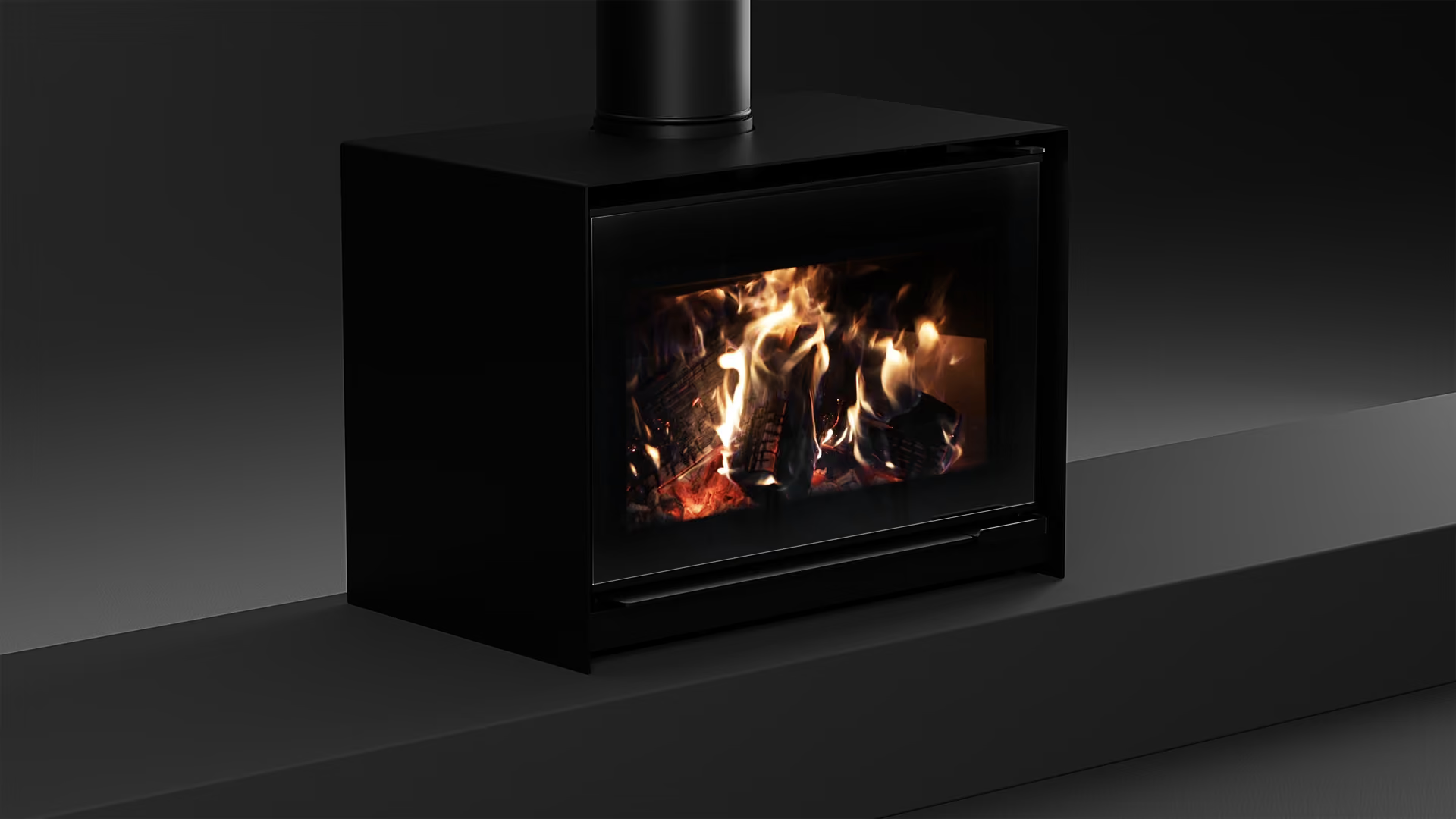
<Paragraph><Link url="https://www.escea.com/wood-fireplaces/tfs-series/freestanding-single-sided/" target="_blank">Freestanding fires</Link> sit within the room with a visible flue. They’re often used to replace older burners or create a strong focal point, delivering strong radiant heat. They’re also generally simpler to install, making them a common choice for existing homes.</Paragraph>
<Break />
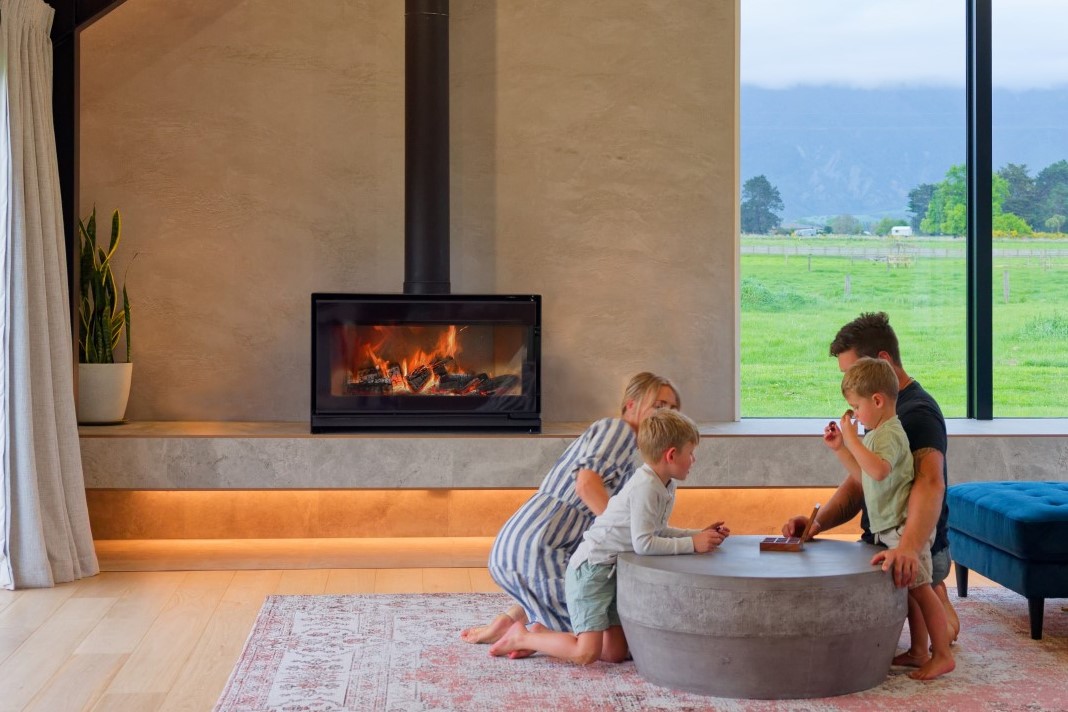
<Paragraph><Link url="https://www.escea.com/wood-fireplaces/tc970/single-sided/" target="_blank">Inbuilt fires</Link> are installed into a wall or cavity, with the flue concealed. With some projects this approach can involve additional installation work. Both categories perform well — the right choice comes down to your space, your plans, and the role you want the fire to play in the room.</Paragraph>
</RichText>
</TextBlock>
<ImageGroup layout="50:50">
<Image format="square" file="https://cdn.prod.website-files.com/69294541b21cf576e68ed053/69f0260ddd73da6d5b1e6120_TFS850%20Roomset%201%20webres.avif" description="Escea TFS850 Freestanding Wood Fireplace">
<Label>
Choose between freestanding and inbuilt wood fireplace style.
</Label>
</Image>
<Image format="square" file="https://cdn.prod.website-files.com/69294541b21cf576e68ed053/69fd282ec106fc794a7e2b10_TC970%20Roomset%205-2%20webres.jpg" description="">
</Image>
</ImageGroup>
<TextBlock>
<Title>Step 4: Choose the Right Wood Fire for Your Home</Title>
<RichText>
<Paragraph>A wood fire is ultimately a heating appliance — and choosing the right one has a big impact on comfort and efficiency. Focus on the essentials:</Paragraph>
<Break />
<UnorderedList>
<ListItem><Strong>Flue Design</Strong> varies between fires and can have a noticeable impact on efficiency, airflow, and how well the fire performs in your home. Traditional wood fires draw air from inside the room, which creates draughts. <Link url="https://www.escea.com/journal/watch-esceas-direct-vent-technology-explained" target="_blank">Escea’s Direct Vent system</Link> instead draws air from outside, reducing draughts and improving overall heating efficiency inside the home.</ListItem>
<ListItem><Strong>Heat Output </Strong>should be matched to the area of your home you want to heat. As a general rule, 1 kW of heat output will warm approximately 10 m² of floor area. To estimate your needs, calculate your room size (length × width), then divide the total floor area by 10. This will give you a minimum heat output requirement in kW. Learn more in our <Link url="https://www.escea.com/tech-docs-files/630555-heating-area-guide-au-nz" target="_blank"><Emphasis>home heating guide.</Emphasis></Link><Emphasis>*This guide assumes standard 2.4 m ceilings, double glazing and good insulation.</Emphasis></ListItem>
<ListItem><Strong>Efficiency </Strong>determines how much heat you get from the wood, with more of that heat retained in your home rather than lost through the flue.</ListItem>
<ListItem><Strong>Emissions </Strong>indicate how cleanly a fire burns and may affect what you’re allowed to install depending on your region (ULEB zones). More efficient fires typically burn more completely, which can also help reduce emissions.</ListItem>
<ListItem><Strong>Firebox Design </Strong>plays a key role in performance. A well-designed firebox maximises heat output while allowing space for larger logs and efficient burning.</ListItem>
</UnorderedList>
</RichText>
</TextBlock>
<TextBlock>
<Title>Step 5: Plan Your Installation</Title>
<RichText>
<Paragraph>Once you’ve chosen your fire, the rest of the process becomes more straightforward.</Paragraph>
<Break />
<UnorderedList>
<ListItem>Apply for building consent.</ListItem>
<ListItem>Confirm installation details with your installer.</ListItem>
<ListItem>Plan around any renovation or building work where possible. Installing alongside other work can help reduce cost and avoid rework later.</ListItem>
</UnorderedList>
</RichText>
</TextBlock>
<Image format="square" file="https://cdn.prod.website-files.com/69294541b21cf576e68ed053/69fd27fa1d2dab74cf8c7d2d_TC950%20Roomset%204-1%20web%20res%20cross%20section.jpg" description="Escea TC970 Wood Fireplace">
</Image>
<TextBlock>
<Title>Quick Planning Checklist</Title>
<RichText>
<Paragraph>While size is important, factors like efficiency, airflow, and firebox design all play a role in how well a fire performs day to day.</Paragraph>
<Break />
<Paragraph>If you’re starting to plan a wood fire, this is a good place to begin:</Paragraph>
<Break />
<UnorderedList>
<ListItem>Check what rules apply in your area.</ListItem>
<ListItem>Confirm which fires are permitted.</ListItem>
<ListItem>Understand consent and installation requirements.</ListItem>
<ListItem>Choose between freestanding or inbuilt.</ListItem>
<ListItem>Consider performance factors like efficiency, flue design, and heating capacity.</ListItem>
<ListItem>Select a fire suited to your home size.</ListItem>
<ListItem>Engage a qualified installer.</ListItem>
<ListItem>Plan installation timing alongside other work.</ListItem>
</UnorderedList>
<Break />
<Paragraph>Taking the time to get these steps right makes the process much smoother.</Paragraph>
</RichText>
</TextBlock>
<TextBlock>
<Title>Explore Your Options</Title>
<RichText>
<Paragraph>Modern wood fires balance performance, emissions, and design. Escea wood fireplaces are designed for New Zealand homes, with options suited to both freestanding and inbuilt applications.</Paragraph>
</RichText>
</TextBlock>